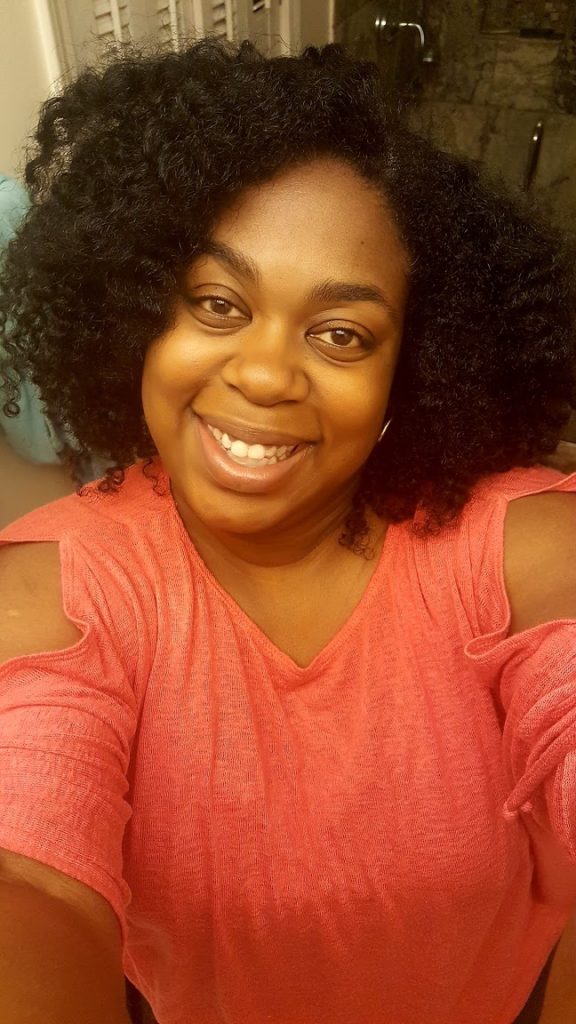
I have an advanced degree with a focus in psychological development.
I understand trauma bonding. I understand attachment theory. I understand the neuroscience of intermittent reinforcement and how it activates the same dopamine pathways as addiction. I can explain, clinically and precisely, exactly why a woman stays in a relationship that is destroying her.
And I choose a malignant narcissist every single time.
Not a garden variety selfish man. Not someone who is emotionally unavailable in the way that most people mean when they use that phrase. A malignant narcissist. The specific kind who does not just lack empathy but derives genuine pleasure from causing pain. The kind who will look you in the eye while dismantling your sense of reality and feel something that resembles joy while doing it.
I know this. I have known it each time. And I choose him anyway.
I am writing this because the silence around this particular pattern in Black women’s lives is its own kind of wound. And I am done being quiet about a wound that has cost me more than I have ever publicly accounted for.
First, the distinction that matters.
Most people hear narcissist and picture someone who is arrogant and self-absorbed. Difficult. Exhausting. Someone who makes everything about themselves and leaves you feeling depleted.
That is not what I am describing.
A malignant narcissist is something qualitatively different. The term was introduced by psychoanalyst Otto Kernberg to describe what he considered the most severe and destructive form of narcissism – sitting on a spectrum between standard narcissistic personality disorder and full psychopathy. It combines narcissistic grandiosity with antisocial behavior, aggression, and sadism.
Sadism. The clinical, documented enjoyment of causing pain.
A regular narcissist might ignore your feelings because he is self-absorbed. A malignant narcissist will deliberately target your feelings because watching you hurt makes him feel powerful. His eyes light up when he reduces you to tears. He does not just deflect or blame-shift when confronted – he retaliates with calculated cruelty designed to cause maximum psychological damage.
He is not broken in the way most people mean when they call someone broken. He is functioning exactly as designed. The pain he causes is the point.
And somehow, I have spent decades finding him, choosing him, and sliding down that pit every time.
The architecture of the woman he chooses.
This is where the Black woman focus becomes essential because the research is specific and damning.
More than half of Black women- 53.6% – report lifetime intimate partner violence. More than half. That number is not an accident. It is the outcome of a specific set of cultural and psychological conditions that the Strong Black Woman schema produces and the malignant narcissist exploits.
The Strong Black Woman. Keep quiet. Serve. Work hard. Make it right every day until you cannot anymore. Mask the pain. Demonstrate unwavering strength in the face of everything. Do not ask for help because asking for help means you are not strong enough.
Research published in the Journal of Black Psychology establishes a direct link between endorsement of the Strong Black Woman schema and negative mental health outcomes- greater anxiety, depression, and stress. Black women in these studies specifically related being strong with feeling like they could not seek help when in need and the belief that they must sustain and cope with immense emotional trauma alone.
We are trained from childhood to absorb. To keep going. To not put our pain on display. To find a way to make the broken thing work because leaving it broken is not an option we were given permission to choose.
The malignant narcissist does not stumble into this. He finds it. He recognizes the architecture of a woman who has been trained to stay and try harder. And he builds his entire operation on top of it.
Where the wiring comes from.
I know where mine comes from.
Toxic male role models who modeled dominance and emotional unavailability as the baseline of what a man is. Adult women around me who framed their own experiences in the same pattern I would later replicate- keep quiet, serve, work hard, make it right, do not let anyone see the cost of it. Love as something you earn through sustained effort rather than something that exists in the presence of safety.
The brain learns from what it survives. If a child’s primary environment taught her that love was conditional, unpredictable, and required constant performance to maintain- her nervous system files that as the template for what love feels like. Not what she consciously wants. What feels familiar enough to register as real.
The malignant narcissist feels like love. Specifically, he feels like the love I learned to reach for. Intense, consuming, unpredictable. Hot and cold and hot again. The moments of warmth land harder because the cold is so consistent. The neurochemistry of that cycle- intermittent reinforcement, dopamine spikes followed by withdrawal- creates a bond that is psychologically as difficult to break as addiction. Not because of weakness. Because of neuroscience.
I know this. I have known this for decades. Knowing it does not change the pull.
What the pit feels like from the inside.
I have been in therapy for most of my adult life. I have been single for long stretches- fifteen years at a time, my longest- because the alternative was choosing him again and I was not ready to watch myself do that again just yet.
I know the meditations. I know the self-love practices. I do the talk therapy. I understand intellectually that what I am reaching for is the wound made familiar, not love made safe.
And still.
There is something specific about what the malignant narcissist offers in the beginning that I need to name honestly because it is what hooks every woman who ends up in this particular pattern. He sees you. Completely. He studies you with an intensity that feels like devotion. He mirrors your language, your values, your desires back to you so precisely that you feel more known than you have ever felt in your life. This is called love bombing and it is the opening move of someone who has identified exactly what you need and has decided to weaponize it.
It feels like home. It feels like finally.
And then the cruelty begins. Slowly at first. A comment that lands wrong. A moment where his eyes do something that does not match his words. A subtle undermining that he will later tell you never happened. And because the love bombing created a bond, because the nervous system has already filed him under safety, because leaving means admitting that finally was not finally at all- you stay. You try harder. You look for the version of him that was there in the beginning because you believe that version is the real one.
It is not. The cruelty is the real one. The love bombing was the recruitment.
What makes malignant different from difficult.
I want to be precise about this because the conflation of difficult men with malignant narcissists does a disservice to both the people navigating regular relationship hard and the people trying to understand why they cannot leave something that is actively harming them.
A difficult man is selfish. A difficult man prioritizes himself. A difficult man is emotionally unavailable in ways that leave you feeling lonely and unseen.
A malignant narcissist watches you cry and something in him settles. The pain is not a side effect of his behavior. It is the product. He will revisit your most vulnerable moments and reshape them into weapons. He will make you feel responsible for your own destruction. He will leave you questioning your own perception of reality- not because he is confused but because destabilizing your sense of what is real keeps you dependent on him to tell you what is true.
He does not love you in the low volume way that difficult men love. He does not love you at all. What he has for you is appetite. And appetite is satisfied and then replaced with hunger and then satisfied again and the cycle is what you mistake for a relationship.
The low love volume man- the one who is simply not built for the love you deserve- is painful. The malignant narcissist is dangerous.
They do not look the same from the outside. They feel almost identical from the inside, which is the most disorienting part of trying to understand why you keep choosing.
And I want to be clear about something that challenges every assumption people make when they hear the word abuse. I have never endured physical violence. Not once. And I say that not as a point of pride but as a point of precision- because what I have endured is emotional abuse. And there are moments, more than I care to count, where I have thought that I would have traded the emotional chaos for a slap. At least a slap has an ending.
Physical violence leaves evidence. It leaves marks that other people can see, that a doctor can document, that a courtroom can consider. It is brutal and inexcusable and it is also, in its terrible way, identifiable. You can point to it. You can name it. You can leave it and have the bruise as proof that leaving was necessary.
Emotional abuse creeps. It arrives so slowly and so subtly that even the most psychologically sophisticated woman does not recognize she is inside it until she tries to move and discovers she cannot. There is no single moment she can point to. There is no bruise. There is only the slow erosion of her sense of reality, her confidence in her own perception, her belief that she deserves better than what she is receiving.
By the time she knows she is stuck, she has already been stuck for longer than she realized. That is not weakness. That is the precise and deliberate design of emotional abuse. It was built to be invisible until it was inescapable.
The Strong Black Woman in the pit.
Here is the specific cruelty of this pattern for Black women.
We are not permitted, culturally or socially, to be in a pit. We are supposed to be strong. We are supposed to hold things together. We are supposed to be the woman who handles it, whatever it is, including him.
So, we handle him. We adjust. We absorb. We bring our full psychological and emotional intelligence to the project of making this relationship work because that is what we were trained to do with hard things. We fix hard things. We survive hard things. We make hard things functional through sheer sustained effort and will.
The malignant narcissist knows this. He counts on it. Your strength is not a protection against him. It is the feature he came for.
And when the relationship finally ends- if it ends, because many don’t, because the trauma bond holds even when the woman knows exactly what it is – there is no cultural permission to fall apart. There is no space to say that she was in something that required clinical language to describe. There is no framework in the Strong Black Woman schema for being a survivor of something this specific and this brutal.
So, she gets up. She handles it. She goes silent for a few years. And then she finds him again because the nervous system does not care about what she knows. It cares about what feels familiar.
The life built in between.
Here is what therapy and decades of self-work and the particular acceptance that comes from being broken and putting yourself back together repeatedly has taught me.
I cannot control this part. So, I pour everything I have into the parts I can.
I travel. Intentionally, frequently, and with full presence. A great sit-down with a beautiful beverage in a beautiful space somewhere in the world that reminds me the planet is enormous and my life inside it is genuinely rich. Time with people who love me without conditions- because love in my immediate family has always come with conditions attached, and finding people who offer it freely is something I do not take lightly or for granted.
I am completely dedicated to improving every part of myself that I have access to. And in those spaces, I find something that functions like peace. Real peace. The kind that does not require anyone else to show up correctly.
I think this might be part of the pattern too. The life I build between relationships is so full, so intentional, so genuinely satisfying that it creates a kind of confidence that feels like readiness. Like maybe this time will be different. Like the work I have done has finally built enough foundation to hold something healthy.
And then here his funky ass comes again.
And I find myself digging out of a hole. Filing restraining orders. Cleaning up the administrative nightmare a malignant narcissist leaves behind when he finally goes- because they do not just leave your heart in pieces, they leave your actual life in disarray. Your paperwork. Your accounts. Your sense of safety in your own space. The logistics of being free from someone like this are their own kind of trauma.
Every time one of these relationships ends, I make the vow. Stay single. Enjoy the life I have built. Work on it in therapy. Self-talk. Prayer. Meditation. And I mean it every time.
I mean it right now.
And I also know myself well enough to know that this accounting- honest as it is, public as it now is- is not a guarantee of anything. It is just the truth of where I am. Sitting in it. Writing it down. Letting it be seen.
Which is more than I have ever done before.
And maybe that is something.
What I know and what I do not.
I have an advanced degree in psychological development. I have been in therapy for decades. I understand this pattern with a clinical precision that I can deploy to help other people navigate it.
I cannot get it right for myself.
One thing I want to be precise about. My anxiety and depression are chemical. They exist on a separate plane from my romantic relationships entirely and I know that is hard to believe given everything I have just described. But I am not sad about being in these relationships. I do not spiral into depression because of them. I deal with my mental health through therapy, a carefully managed regimen of supplements and peptides that keep my hormones, cortisol, and routines in check. That work has significantly reduced the instances where either anxiety or depression were debilitating. I have built a system for that part of my life and it works.
The relationship pattern is its own separate room. I am not broken by it in the way people might assume. I am clear-eyed about it. I am just still inside it. Those are different things.
That is not a confession of failure. It is the honest truth about how deep this wiring goes. Knowing the theory of a wound does not heal the wound. Understanding the neuroscience of trauma bonding does not override the nervous system’s filing system. Having the vocabulary for what is happening does not give you immunity from the pull of what is familiar.
What I know is that the silence makes it worse. The Strong Black Woman schema that tells us to mask the pain and keep moving is the same schema that keeps us isolated in these patterns. The woman sitting across from me in a meeting who has her life together from every visible angle- she might be choosing him too. Every single time. And she cannot say it out loud because strength has been assigned to her as a permanent condition rather than a resource she gets to decide when to deploy.
We need to be able to say it out loud.
This cuts deep. But I do not feel sad writing it. It is just a normal Saturday for me. And that- the fact that this level of truth has become ordinary- is perhaps the most honest thing I can tell you about what this pattern costs over a lifetime.
I choose him every time. I know exactly what he is. I know exactly why I choose him. And I have not yet found the thing that makes me stop.
That is not the ending I wanted to give you. But it is the true one.
And sometimes the truest thing you can do for someone else is refuse to wrap your wound in a bow just because it would make them more comfortable.
There is no bow. There is just the truth of it, sitting here in the open where it can finally be seen.
If this is your pattern too – drop it in the comments if you are ready. Or just read this and know you are not alone and you are not broken and knowing has never been the whole answer for any of us.