Your Ancestors Already Knew What Your Nervous System Needs
Let me tell you where a lot of us are right now.
Our relationships with our partners are frayed. Not broken necessarily, but stretched thin in ways that did not used to show. Our adult children are in crisis- mental health struggles that we did not have language for at their age and still barely have language for now. Our jobs are paying the bills and absolutely nothing else. No fulfillment. No growth. No sense that what we pour into eight hours a day is building toward anything that matters. And our trajectory- the arc we imagined for this season of life- feels stalled in ways that are hard to explain to people who are not living it.
That is a lot to carry. And most of us are carrying it quietly, because that is what we were taught to do.
But here is what I have learned. When everything feels impossible, the answer is almost never more striving. It is not another productivity system or another goal-setting framework or another conversation about manifesting. The answer is almost always smaller and older and more physical than any of that.
Go back to the basics. Your ancestors already knew what your nervous system needs.
The Body Keeps Score. So Does The Home.
There is a reason your grandmothers cleaned their houses on Saturday mornings with intention. There is a reason they changed the bed linens on Sundays. There is a reason they kept certain herbs in the kitchen and certain candles burning and certain things they did before they started the week that nobody fully explained but everybody understood meant something.
They were not being superstitious. They were being precise.
The physical environment you inhabit affects your mental state in ways that are documented and real. Clutter creates cortisol. Scent activates memory and emotion directly through the brain’s limbic system. Repetitive physical acts- sweeping, mopping, washing- create rhythm, and rhythm creates calm. Your ancestors did not have the neuroscience to explain it. They had the wisdom to practice it anyway.
I lean into that wisdom hard when things get heavy.
What I Actually Do
When the weight of everything starts pressing in, I do not try to think my way out of it. I move.
I draw a long bath with Epsom salts, a little sugar, and rosemary. Not because someone told me to. Because it works. The magnesium in the salts pulls tension out of the body. The rosemary clears the air and the mind. The sugar is sweetness- literal and symbolic. I stay in until the water cools and I have no choice but to get out.
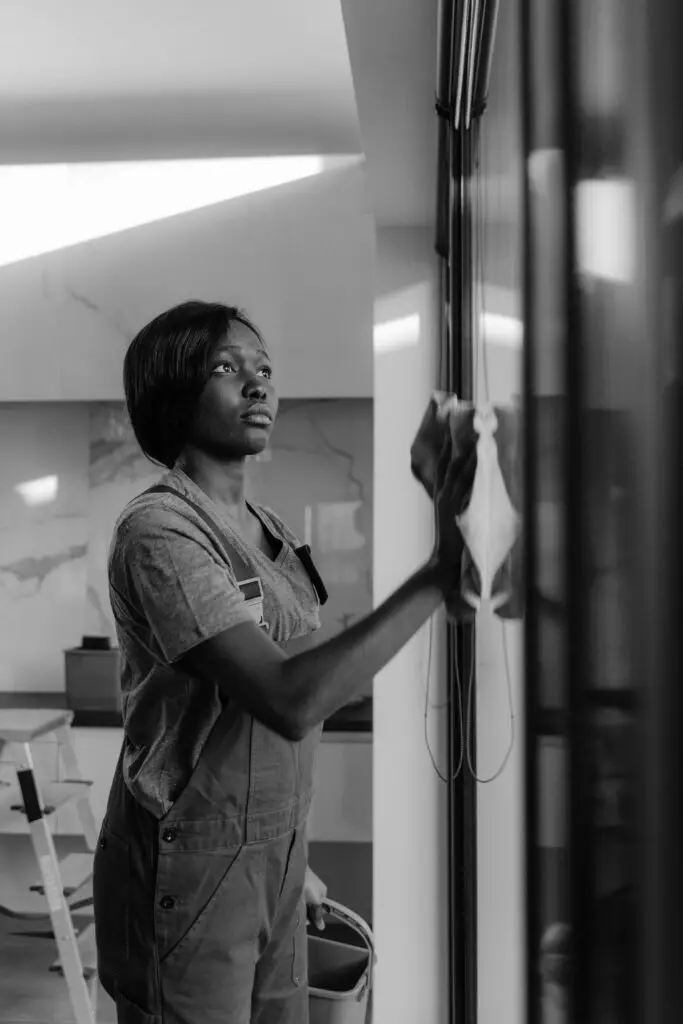
I sweep my floors and push everything out past my front door. Then I mop with something that makes the house smell like somewhere I want to be. I wash my doorways until they shine. There is something about cleaning the threshold- the place where outside meets inside- that feels like an act of protection. Like you are deciding what gets to enter your space and what does not.
No shoes past the vestibule- if I have company and they wear shoes (first floor only), immediate floor washing and balancing prayers after they leave. No one is allowed on my 2nd floor where my bedroom and sacred spaces are. Mind yo bidness.
I change my bed linen every Sunday without exception. I face every week in clean sheets. That sounds small. It is not small. It is a decision to start fresh. It is a physical commitment to the week ahead.
I soak my feet in Epsom salt, baking soda, and a few drops of peppermint, lavender, and rosemary essential oils. Your feet carry you through everything. They deserve attention. And sitting still long enough to give them that attention forces you to slow down in a way nothing else quite does.
I burn incense or a candle that smells like somewhere peaceful. I let the scent do its work.
The Inner Work That Matches The Outer Work
The rituals are not enough on their own. They create the conditions. You still have to show up for what those conditions make possible.
So I meditate. Not on what is wrong- there is always enough of that waiting. I meditate specifically on what has gone right this week. Even one thing. Even something small. A conversation that landed well. A moment of unexpected peace. A bill that got paid. A body that woke up and kept going. There is always something.
I practice gratitude out loud. Not as performance. As recalibration. What am I grateful for today, specifically, in real terms? I make myself answer the question before I do anything else in the morning.
And I pray. Not pedological religion- not doctrine or obligation or someone else’s framework for what a conversation with God should look like. Just me, talking to something larger than my current circumstances, trusting that the act of reaching out matters even when I cannot see where it lands.
What This Is Really About
There is a physical answer to mental manifestation. Your mind and body are not separate systems operating independently of each other. When your mind is in crisis, your body feels it. When your body is neglected, your mind pays the price. The rituals close that gap. They bring you back into yourself when everything external is pulling you apart.
This is not about being spiritual in a way that requires explanation or defense. It is about paying attention to what your nervous system is asking for and answering it with something real. Something you can touch and smell and feel. Something your great-grandmother would have recognized.
You do not have to do all of it. You do not have to do any of it exactly the way I do.
But tonight, when the weight of everything settles in the way it does- pick one thing. Draw the bath. Change the sheets. Light the candle. Sweep past the door. Soak your feet and sit still for fifteen minutes and let yourself feel the relief of having done one intentional thing for yourself.
Your ancestors built these rituals because they worked. They still work.
Reclaim them. They belong to you.