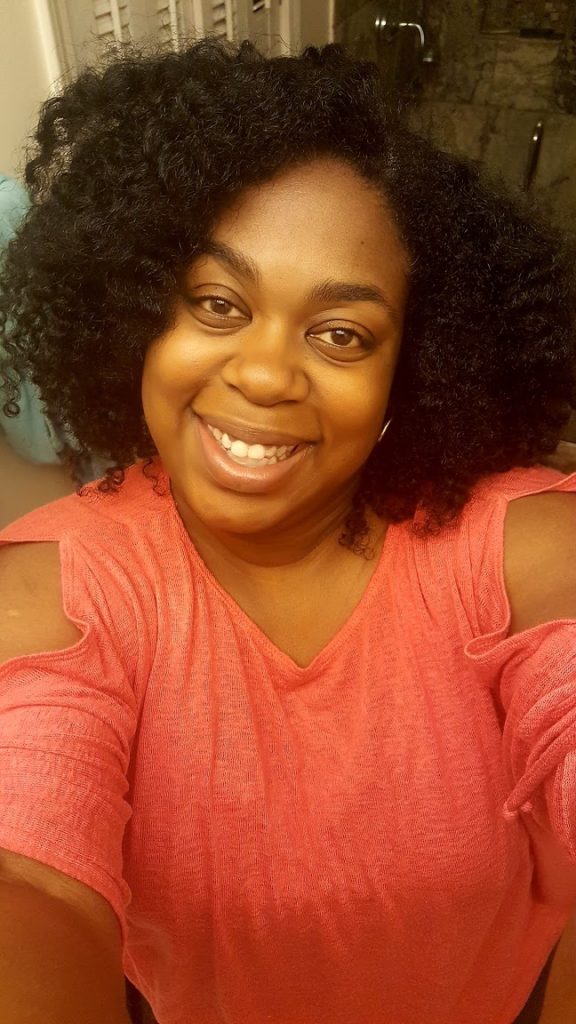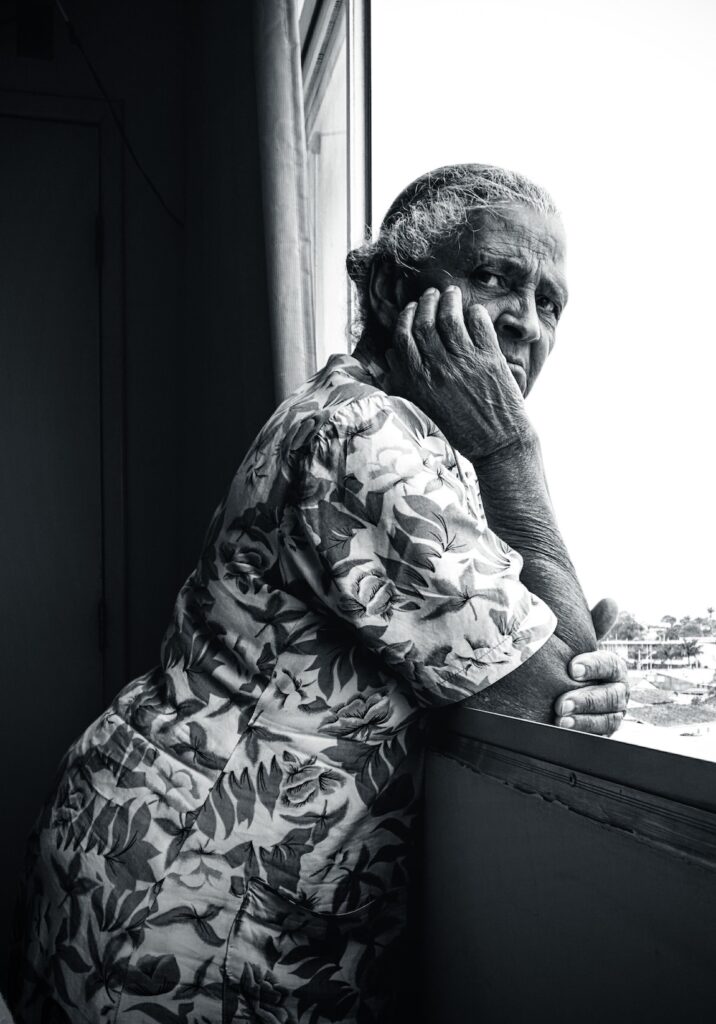
My sister lives ten minutes from the facility. I get a shot at seeing her once a quarter, if the trip even lines up.
My mother is in a nursing home in Philadelphia. My sister lives ten minutes from the building. I live nearly eight hundred miles away, which means the math was never about who loves her more. It is about geography, plain and unglamorous, the kind of math nobody puts in a greeting card.
I get maybe one real shot a quarter. Not a guarantee, a possibility, and only if a trip lines up with everything else running my life right now. That sentence is doing a lot of work. Everything else running my life right now is a phrase I have learned to say with a straight face, and most of it is true, and some of it is a door I am relieved to hide behind. When the trip does line up, the drive to see her is still an hour and a half, and I do not always have a car when I am up there, so sometimes the whole visit rides on a rental counter or a text asking to borrow someone’s. Four times a year, if I am fortunate. My sister sees her whenever she wants to. She just drives over. I know exactly how that sentence sounds when I am the one explaining why I could not.
I am super grown, on the other side of fifty, which means I am not the version of this you usually hear about, the one juggling a toddler’s pickup line and a parent’s medication schedule in the same afternoon. My daughter and I are estranged, which is its own chapter and not this one. What I am juggling instead is a corporate job, a consulting practice, a property management company, and a blog that asks me to hand over the truest parts of my week on a schedule. Forty five percent of people in their fifties are still doing some version of the sandwich, a parent on one side and their own full life on the other, even without small children pulling at the middle. Nobody put that in the definition. It is still the definition.
My sister and I agreed she would take the lead on this part, the part where our mother lives in a building and needs to be visited. What that agreement does not advertise is the twenty years before it. I had full responsibility for our mother during those years, while raising my daughter alone, a single parent managing a parent’s decline in the other room of the same life. I dealt with the losing time. The anger. The sadness. The specific chaos of watching people circle my mother while she still had full access to her own accounts and no defense left against anyone who noticed. More than once I flew to New Jersey with my daughter in tow because somebody needed to be cussed out in person, somebody who had worked out exactly how much of my mother’s memory they could bank on before the transaction cleared. That is its own kind of rage, watching a stranger do arithmetic on your mother’s confusion.
What nobody warns you about is the other side of that fight. My mother would call family members and tell them I was stealing from her, because from where she stood, thousands of dollars kept disappearing right after I put her accounts on lockdown, and lockdown looked exactly like theft to a mind that could no longer hold both facts at once. I spent that whole stretch doing the actual protecting while wearing the actual accusation. Side-eyes at family gatherings. Whispers about what I must be doing to my own mother’s money. Nobody bothering to ask me directly. I have still not resolved my feelings about that. The same people who will tell you plainly today that she was in the early stages of dementia back then act like they never said a word against me while it was happening, like I imagined the gossip, like I did not need one single person in my corner while I was fighting off strangers with one hand and family suspicion with the other. All while everyone around her, doctors included, kept saying she was fine, and I knew, in the way a daughter knows, that she was not fine at all. By the time she moved into that building, I had already spent two decades carrying the part nobody sees. My sister taking the lead now is not her doing more than me. It is the two of us finally splitting a weight I used to carry alone, and if it still comes with guilt every time I cannot make the drive, that guilt is old news to me. I have just moved on to a new address for it.
And when the drive does happen, and I am standing in that room, here is what nobody tells you about a mind going the way vascular dementia takes it. It is not a door that is open or closed. It is her body, unmistakably hers, the same hands I have known my whole life, and for the first stretch of the visit she does not know who I am. Not blankly. Not cruelly. She is looking at a woman in her room the way you look at someone new, working out where to place me. It takes hours, sometimes most of the visit, before something surfaces and she picks up on who I might be. Might be. Not is. I have sat with my own mother for the better part of an afternoon as a stranger she was slowly, generously deciding to trust.
I used to think the hard part would be her forgetting me completely. Turns out the hard part is this instead, the in-between, watching recognition arrive late and leave early on a visit I only got four chances a year to have in the first place. By the time she has fully placed me, the visit is nearly over, and I am already doing the math backward from whatever drive gets me to the airport and whatever flight gets me back to the rest of my life.
Roughly 15% of the thirty-four million Americans caring for an aging family member are doing it from a distance, an hour’s drive away or more. I went looking for that number expecting it to feel like relief. Instead, it told me the math I already carry in my body has a name and a category, that there are people all over this country splitting a parent between the one who lives close and the one who does not. One of them carries the daily weight of it. The other carries the quarterly guilt of it. Neither version is the easy one.
Here is what the visit actually looks like, the parts before she finds me. I do not talk to her the way you talk to someone you are hoping catches up on current events. I mention fun things from our shared past. I mention our visits to my grandmother’s house, the specific things only the three of us would remember, the kind of memory that apparently outlives the kind that carries my name. Sometimes nothing clicks before I have to leave, and I get back on the road measuring the visit by a different scale than whether she recognized me, because if I measured it that way, four times a year, I would stop going. I am not willing to stop going.
I do not have my next trip locked in yet. I know the math. Eight hundred miles, ninety minutes past that, a car I may or may not have, a business or three demanding I stay put, and a sister who agreed to carry this chapter because I already carried the last one. I know all of that is true and none of it is really the reason I have not booked the flight. The reason is standing in that room and watching my mother work out, slowly, who I might be to her, knowing I only get a handful of chances a year to be worked out at all. I will go again. I always go again. I am just not ready to tell you when.
If you have ever carried the early years of a parent’s decline alone and then had to hand the next chapter to someone else, tell me how you made peace with the guilt that outlives the labor. I have not made peace with mine yet. I would like to borrow someone else’s.