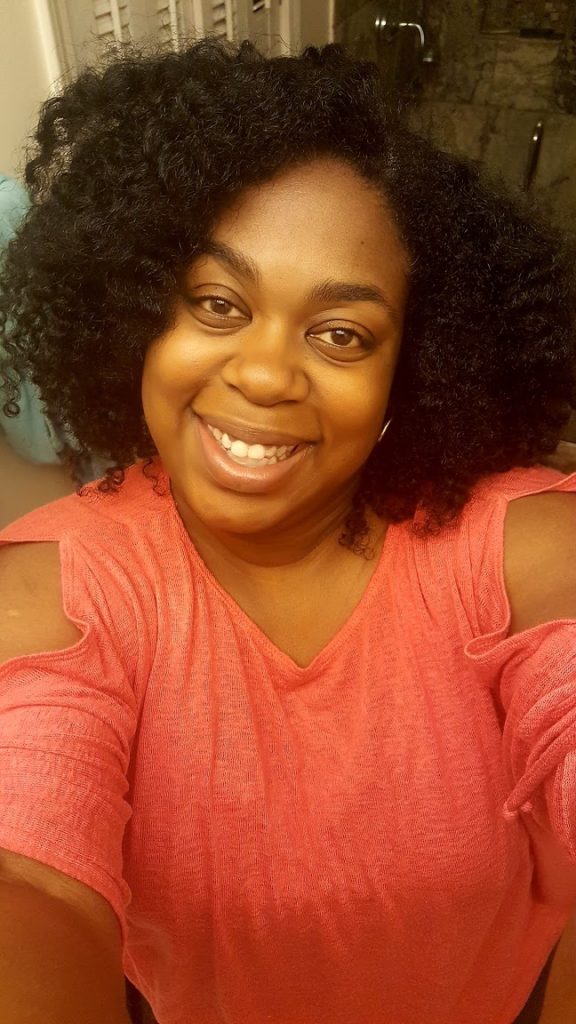
Let me tell you about the day I put myself on the wheelchair list.
I was heading to Gambia. I had a cold- a pretty nasty one, nothing dramatic, just the kind that sits in your chest and makes breathing a negotiation. I had Walter in his carrier, my carry-on with three laptops and approximately everything I own, and a connection to make that required moving through an airport at a pace my body was no longer capable of sustaining.
I pulled out my phone somewhere between gates and requested wheelchair assistance for the remainder of the trip.
I was mortified. I am a woman who moves through the world with intention and purpose and I could not walk through an airport with a cold without my body staging a full protest. That was the moment. Not a dramatic one. Not a rock bottom that looks good in a movie. Just a quiet, humiliating, completely private moment of reckoning on a moving walkway in an international terminal.
I said- this is enough.
How I got here.
Twenty-five years of accumulation. That is the honest answer.
My daughter was born and something shifted – not dramatically, but consistently in the wrong direction. I was under-eating and then eating too much at once, which is the specific kind of chaos that puts your metabolism in a state of total confusion and keeps it there. I do not like exercise. My career is in front of a computer. I moved from New Jersey- where I commuted to the city daily and walked approximately five miles without thinking about it- to South Carolina, where I drive everywhere. The movement I was getting without trying simply stopped existing.
For twenty-five years I was a committed lover of sugar, pasta, butter, and anything carb-adjacent that could be described as delicious. I am a foodie. I love food with genuine enthusiasm and I make no apologies for it. My metabolism had essentially retired. My body was carrying weight that was making everything harder- travel, airports, sitting next to strangers on planes who could not hide their irritation when I needed the space that my body required. Devout Muslim men practically climbing the window seat walls trying not to touch me. Flight attendants with that particular brand of pity on their face when I asked for a seat extender.
I absorbed all of it. Smiled. Kept moving.
And then I could not keep moving. And I asked for the wheelchair. And that was the end of that chapter.
The FDA. A brief detour.
Before I tell you what I did, I need to tell you what I think about the system I decided not to wait for.
The FDA started as something important. An agency designed to protect Americans from the poisons being put in food and medicine by industries that would have happily killed us for profit if nobody was watching. That origin matters. That mission matters.
What it has evolved into is something considerably more complicated.
We now live in a country where you have to be afraid of what is in your supermarket but completely prohibited from accessing research medicines that other countries have been studying and using successfully for years. Where a drug that is producing remarkable results in clinical trials internationally sits in American bureaucratic limbo while the obesity epidemic it could address costs this country over 170 billion dollars a year in healthcare spending.
Let me be direct about something. Fat people in America keep the healthcare system extraordinarily profitable. High blood pressure, diabetes, strokes, heart attacks, knee replacements, hip replacements, sleep apnea treatment, dieticians, physical therapy, cardiac care- this is a multi-trillion dollar ecosystem. It does not benefit an entire industry if within five years a significant portion of that patient population becomes healthy and stops needing all of those services.
I am not saying the FDA is entirely corrupt. I am saying that the relationship between regulatory agencies, insurance companies, pharmaceutical manufacturers, and the medical establishment is a financial ecosystem first and a public health system second. And that understanding that relationship is necessary context for everything that follows.
Enter Retatrutide.
Retatrutide is a triple agonist weight loss drug. What that means in practical terms is that it hits all three relevant receptors simultaneously – glucose regulation, stomach fullness signaling, and metabolism. The existing FDA-approved GLP-1 drugs like Ozempic and Wegovy hit only one of these receptors. There is a dual-agonist drug that hits two- also not FDA approved. Retatrutide hits all three in a single injection.
The research coming out of international trials is, by any measure, remarkable. Researchers studying obesity science are using the phrase “wonder drug” with unusual frequency for a field that is typically conservative with that kind of language. The additional benefits being documented beyond weight loss include reduction in sleep apnea severity, improved organ function, reduced arterial plaque, and percentage weight loss numbers that are meaningfully higher than existing options.
Many researchers who study this drug believe that once it clears FDA approval- which is moving at the pace these things move when there is no particular urgency from the agencies involved- it will likely be directed primarily toward the morbidly obese rather than people looking to lose twenty pounds. The existing GLP-1 medications handle that end of the spectrum adequately. Retatrutide appears to be the option for people whose BMI has put standard interventions out of practical reach.
In the United States, as of this writing, Retatrutide is available through clinical trials only. And in a clinical trial you might get the placebo. I did not have years to wait on a bureaucratic timeline for something that research was already telling me worked.
So, I went looking.
The grey market.
There is an entire world of pharmaceuticals, supplements, and compounds that exist in the space between FDA approval and outright illegality. Not banned. Not approved. Legally ambiguous in a way that the government manages primarily through propaganda and scare tactics rather than actual prohibition, because actual prohibition would require them to acknowledge that the compounds exist and work.
Some people find their way to this market because American pharmaceutical pricing has made their prescribed medications financially inaccessible. Some people find their way here because they have done the research, assessed the risk, and made an informed adult decision that the corporate-controlled approval process is not the only measure of a compound’s safety or efficacy.
I am in the second category.
I spent months doing the work. Reading research. Learning how to evaluate clinical data with the help of my AI tools. Identifying what certifications and verifications I needed to feel confident in a source. Talking to people who had been doing this longer than me and understood the landscape. I am not going to tell you where I landed or how I got there, and I mean that seriously- this is not a sourcing guide and I will not be responsible for directing anyone toward something that could harm them. The grey market requires your own research, your own risk assessment, and your own accountability. Full stop.
What I will tell you is that I found what I was looking for. Verifiable. Certified to my satisfaction. Vouched for by people whose judgment I had reason to trust.
And I started.
What happened.
No nausea. No dramatic side effects. Just a quiet, almost eerie shift in the noise level around food.
I have been hungry my entire adult life in a way that was not really about hunger. It was about the specific chaos of a body that had been under-fed and over-fed in alternating cycles for decades until it stopped trusting the signals entirely. I also carry slight auto-immune issues and chronically high cortisol levels- both of which were quietly sabotaging everything I tried to do to get healthy. High cortisol alone is enough to stall weight loss completely, keep inflammation elevated, and make your body hold onto fat like a survival strategy. Addressing those issues required their own research and their own grey market solutions- supplements I have talked about in other posts and will continue to cover. Each one was a deliberate, researched decision. None of it was casual.
The urges were constant. The relationship with food was not nourishment- it was management. Managing cravings, managing guilt, managing the exhaustion of a body that was working too hard to carry too much weight and demanding fuel in the form of sugar and carbs and anything that would give it a fast hit of something.
Retatrutide got rid of the noise.
That is the only way I know how to describe it. The static cleared. And what was left was something I had not had access to in a very long time- common sense about food.
When you are obese, common sense about food is not as simple as it sounds. When your lower back hurts every time you move for more than ten minutes, when your body is in a constant low-grade state of inflammation and exhaustion, the idea of making calm, rational, intentional decisions about what and when to eat is genuinely out of reach. The biology is working against the intention. You cannot think your way out of a system that is chemically dysregulated.
The drug regulated the system. And then I could think.
What thinking looks like now.
Because I am never hungry in the old way, I have to schedule eating. This sounds like a small thing. It is not a small thing. It means I am making deliberate decisions about what goes into my body at what time for what purpose rather than responding to urgency and craving and whatever is closest when the hunger peaks.
I eat 180 grams of protein a day. I work out for no more than thirty minutes at a time because I still fervently dislike exercise and I am not going to perform a conversion I have not had. I am building strength. I am losing weight. And I am doing it from a place of clarity rather than desperation.
And I want to be clear about something because the diet culture conversation requires it. I do not diet. I eat what I want. There will be Chicken au Poivre this week, with buttery mashed potatoes, made from scratch. I’ll eat a fraction of what I once was able to throw down- literally a small kid’s portion, likely. But it will taste good and I will feel great afterwards. That’s the whole point. Common sense prevails now in a way it simply could not before. I love sweets – genuinely, deeply, without shame. But a couple of tablespoons of pasta is all I need now and the rest gets wrapped up for later. A box of cookies that would have been gone before the movie ended is now sitting in my house for weeks. The severe urges are gone. That is a goal in itself. That is the whole thing, actually.
The binge is gone. The feast and famine cycle is gone. What replaced it is something that feels almost boring in the best possible way- a straightforward relationship with food as fuel, calibrated to what my body actually needs, without the drama.
Eighty pounds gone. More to go. Walter earned his support dog credentials finally and walks next to me now in a dignified, home-trained manner. The airports are getting easier. The seat extender conversation has become a memory.
Taking your health into your own hands.
I also discovered something that changed my relationship with the medical establishment entirely- I can schedule my own lab tests. No doctor referral required. No appointment with someone who is owned by a hospital system and financially incentivized by a pharmaceutical company to keep me in a cycle of managed illness rather than actual health.
I track the appropriate levels myself, using the AI tools available to me to help interpret what the results mean and what I should do with the numbers I am seeing. I know what I am looking for. I use that information to make decisions about my own body like the grown woman I am. The democratization of health information is one of the most powerful tools available to people who are willing to do the work.
Why I am telling you this.
Not to give you a sourcing guide. Not to tell you to do what I did. Not to suggest that the grey market is safe for everyone or that my experience will be your experience.
I am telling you because the conversation about obesity in America is dominated by shame and diet culture and pharmaceutical companies that want you on a subscription medication forever, and almost nobody is talking honestly about what it actually feels like to be inside a body that has stopped cooperating and what the options look like from there.
I did the research. I made an informed decision. I am accountable for that decision and I am not asking anyone to follow me into it.
What I am asking is that you consider whether the system you have been trusting to manage your health is actually designed to make you well – or whether it is designed to manage your illness in a way that profits them and kills you slowly.
Those are different goals. And knowing the difference might be the most important health decision you make.
Are you on a weight loss journey – GLP-1, lifestyle change, something else entirely? Drop it in the comments. No judgment here.