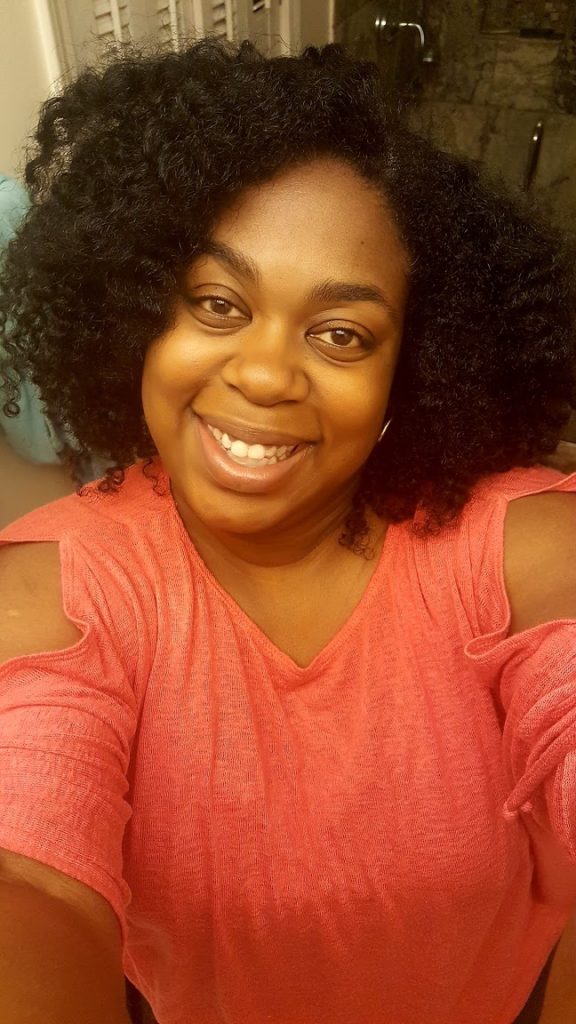
I want to tell you about the worst night of my life.
I was 27 years old, alone, in the middle of a nasty divorce, and in labor with my daughter. I had checked in with my doctor. I had done everything right. I arrived at the hospital and immediately asked for an epidural. I knew what I needed and I asked for it. That part felt like advocacy.
What happened next was something else entirely.
The nurses and doctor gave me Pitocin to speed up labor. They mentioned it in passing. What they did not mention with any urgency was that Pitocin can cause extreme, concentrated pain. What they did not tell me was that if my epidural did not work, I would be on my own.
The epidural did not work.
I was writhing. I could not yell. I could not do anything but grip the bars of the bed and moan. I asked them to fix it. Medical professionals came to check. Over four hours they gave me four additional doses of medication in the epidural space. Four separate doses. Like I was an animal who could take it. With zero pain reduction. And nobody stopped the Pitocin, even after I begged. Nobody called my doctor. Nobody changed the treatment plan.
At 9.5 centimeters dilated, the monitors went crazy. I watched my daughter’s heart rate drop on the screen. Alarms sounded. I was being pushed into the hallway when someone whispered to me that I was getting an emergency C-section because my daughter was in distress.
I was terrified. I was in more pain than I knew a human body could hold. And not one person tried to comfort me.
In the operating theatre, after I was prepped and ready, a resident appeared with a scalpel. I sat up. I said what are you doing. He said we are going to get your baby out. I told him I had no pain medication. He looked at me like I was lying. He made me prove it. Touching different parts of my abdomen. Testing me. While my daughter’s heart rate alarm was going off in the background.
Finally, once he was satisfied I was telling the truth, he called anesthesiology. A spinal was administered. Every bit of pain vanished instantly.
My daughter was born healthy. I am grateful every single day.
But I have never stopped asking the questions nobody answered that night.
Why was my doctor not informed my epidural failed? Who authorized four doses of medication in my spine with no result and no plan change? I found out later it was the head of anesthesiology. The same white man who eventually walked in and administered the spinal that erased my pain minutes before the C-section. He had the solution the entire time. He knew what would work. And he let me suffer for hours before he used it.
Why was the Pitocin never stopped? Why did the resident not look at my chart before picking up a scalpel? Who was there to advocate for me?
Nobody. The answer is nobody.
The story did not end when my daughter was born healthy. My back was so damaged from four doses of failed medication in my spine and multiple needles in it that I could not lift her from the changing table. I had to sit on the edge of the bed to change her diaper for the first four months of her life. Four months of physical therapy to repair what they did. And the entire time, the hospital’s legal machinery was quietly working in the background to make sure the anesthesiology department was protected and I had no viable path to sue them. I was a new mother, alone, in physical pain, caring for an infant, and fighting a system that had already decided whose interests mattered.
Mine did not.
This Is Not Just My Story
Over the years I have talked to Black women across the country and heard versions of this story on repeat. Botched fibroid surgeries. Forced hysterectomies at 35 with no prior medical issues and no real explanation. Episiotomies and C-sections performed without adequate medication. Pain dismissed. Symptoms ignored. Charts not read. Alarms treated as background noise.
This is not a series of individual failures. This is a system behaving exactly as it was designed to.
The maternal mortality rate for Black women in 2023 was 50.3 deaths per 100,000 live births. For white women it was 14.5. That is not close. That is not a gap. That is a gulf carved by centuries of deliberate neglect.
This disparity holds regardless of income or education. The wealthiest Black woman in California carries a higher risk of dying from pregnancy related complications than the least wealthy white woman in the same state. Money does not protect us. Degrees do not protect us. Excellence does not protect us. The system sees our skin before it sees anything else.
And here is where it starts. The 1910 Flexner Report, funded by the American Medical Association, laid the foundation for American medical education and led to the closure of all but two historically Black medical schools. The myth that Black people feel less pain than white people was not a rumor. It was curriculum. It was taught in classrooms and it shaped the instincts of generations of practitioners who are still practicing right now in 2026.
Four hundred years of experimentation and misuse of Black bodies did not end with slavery. It got a white coat and a medical license and kept going.
The Fibroid Wake Up Call
A few years ago I went to my doctor, a white woman, for a routine pap smear. She found fibroids, took an ultrasound, and told me I was just fine. Many Black women have fibroids, she said. Nothing to worry about.
Four months later I visited a Black female fertility specialist wanting to know my chances of having another baby at 47. She pulled the same ultrasound and ran additional targeted scans.
I had twelve fibroids. Several of them the size of a small lime. She told me there was a zero percent chance of carrying a pregnancy in that state. She also told me that if I had tried to wait until my next yearly pap smear, I would have likely experienced a rupture. Best case scenario at that point would have been a full hysterectomy at 48.
She held my hand when she told me. She stayed in the room while I processed it. She answered every question I had and some I did not know to ask yet.
The previous doctor could not have cared less.
The difference between those two appointments was not my health. My health was the same both times. The difference was who was looking at me and whether they saw a patient or a statistic.
What You Need To Do Right Now
I am not telling you these stories so you can feel afraid. I am telling you so you can feel prepared. There is a difference.
Here is what I know about advocating for yourself in a medical system that was not built for you.
Bring someone level-headed with you. Someone with common sense, they don’t need to be a medical professional. Every significant appointment. Every procedure. Every conversation that matters. You need a witness and you need a voice when yours gets ignored or when the pain takes yours away. Do not go alone if you can help it.
Demand a Black provider whenever possible. I insisted on a majority Black operating team for my fibroid surgery. I knew that if my people were in that room while I was unconscious my body would be treated with the respect it deserved. That is not paranoia. That is pattern recognition based on documented history. Use it.
Ask every question until you understand the answer. Not until they seem annoyed. Until you actually understand. What is this medication. What are the side effects. What happens if it does not work. What is the alternative plan. What does this number mean. If you’re scared to step up, have the person you brought with you ask. Keep asking.
Write everything down or record it where legally permitted. The date. The name. What was said. What was not done. What you requested. Documentation is protection.
Use every tool available to you. Google. AI. Reputable medical websites. Patient advocacy organizations. Verify what they tell you. Know your diagnosis better than the person treating you if you have to. It should not be this way. It is this way.
Speak up even when your voice shakes. Especially when your voice shakes. I sat up on an operating table while my daughter’s alarm was going off and I told a resident with a scalpel that he was not cutting me open until I had pain medication. I was terrified. I did it anyway.
And increasingly, if you can afford it, hire a private patient advocate before any hospital stay. Many medical insurance plans will cover part of this service. Ask your insurance provider directly. If they say no, file an appeal. A lot of times, they deny because of how your doctor wrote up the order- get on the doctor, make sure they advocate for you even if they don’t want to. Document everything and be persistent. Black folks are paying for this service because we understand what it means to be alone in a system that does not see us. It is not a luxury anymore. It is a survival strategy.
The Bottom Line
The system has not earned our trust. That is not an opinion. That is a documented, data supported, historically rooted fact.
There is implicit bias when you are a Black patient with a non-Black provider. Knowing that does not fix it. But knowing it means you walk in prepared instead of blindsided.
You are your own best advocate. Nobody is coming to save you in that room. Not in the way you deserve. Not consistently. Not reliably. You have to be loud and specific and persistent and informed and present and all of that while you are also scared and in pain and vulnerable.
It is not fair. It is not right. And it is the reality we are navigating in 2026 in the wealthiest country on earth.
Know your body. Trust what it tells you. Demand to be heard. Do not back down when you get answers you do not understand or do not like.
And if the doctor treating you does not see your full humanity the moment you walk through the door, find one who does.
Your life literally depends on it.