I build furniture.
Not as a job. Not as a side hustle. As a thing I do because I love it – the measuring, the cutting, the satisfying moment when something flat becomes something functional. I have a schedule for it. I protect the time. I am the kind of person who builds things with her hands and considers it non-negotiable.
I also have a planter bench to build.
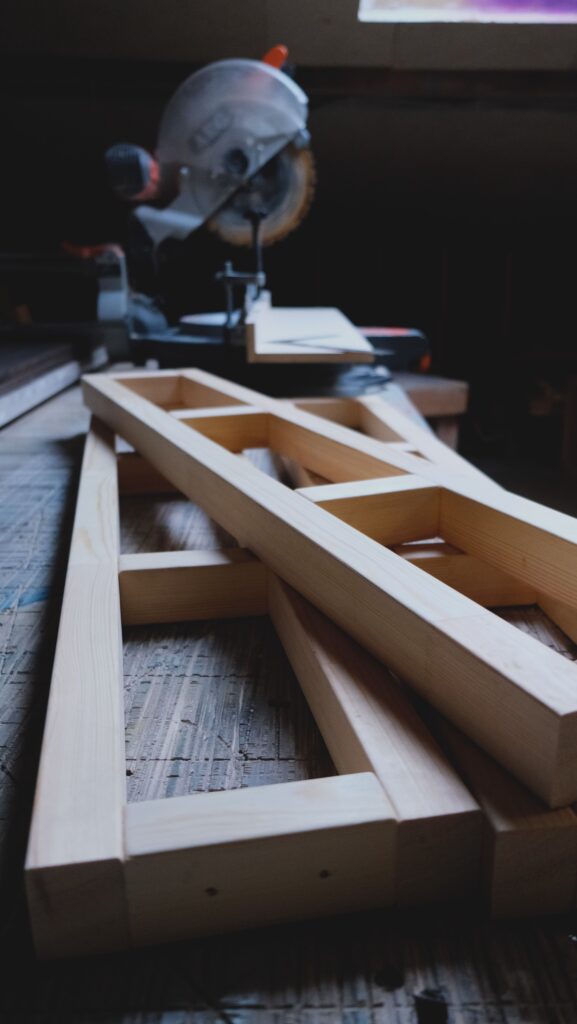
I designed it myself. A full winterization system for my plants in the garage – the bench, the grow lights, the heat mats, the whole setup. I know exactly what I am doing. I bought the wood. I have every tool required. The build is three hours. Maybe three and a half if I take my time.
That wood has been in my garage for a month.
Every single time I walk into the garage I see it. And every single time I see it I feel it – this low-grade hum of failure that sits in my chest for a second before I go do the seventeen other things that apparently needed to happen first.
That feeling. That is what I want to talk about today.
What we call procrastination and what it actually is.
Procrastination has a branding problem. The word itself implies laziness. Avoidance. A character flaw. The image it conjures is someone on a couch watching television when they should be doing something productive.
That is not the procrastination I know. The procrastination I know looks like a woman who has already run three meetings, answered forty-seven messages, managed someone else’s crisis, made dinner, and is now standing in a garage looking at wood and wondering why she cannot find three hours to build a bench.
It is not avoidance. It is depletion.
Black women report some of the highest levels of chronic stress in the United States according to the American Psychological Association’s 2025 Stress in America research. We hold one of the highest labor force participation rates among women at 62.9%. We are breadwinners in 52% of households with children under 18. 40% of Black women leaders report burnout compared to 28% of white women.
And then we carry guilt about the bench.
94% of people who procrastinate say it makes them unhappy. Fear of failure, perfectionism, and lack of energy are among the top drivers. But nobody in that research is talking specifically about what happens when a woman who is already running at 110% tries to find the bandwidth for the thing that belongs only to her. The book she wants to write. The business she has been sketching out for two years. The health appointment she keeps rescheduling. The bench she designed for her plants that is sitting in her garage like a quiet indictment.
The dream does not go away. It just waits. And while it waits it turns into guilt. And guilt is heavy. And heavy things slow you down.
The Strong Black Woman problem.
There is a schema – a psychological framework – called the Strong Black Woman. It is the cultural expectation that Black women are endlessly capable, endlessly resilient, endlessly available for everyone else’s needs before their own. It is praised as a compliment. It functions as a trap.
When you are performing strength for everyone around you all day – showing up, holding things together, being the person who handles it – there is nothing left for the thing that is just yours. Not because you are weak. Because you spent your resources on everything and everyone else and arrived at your own dream with an empty tank.
The bench is not a failure of discipline. The bench is evidence of a woman who gave everything she had somewhere else first.
That is the reframe I want you to take from this piece. Your deferred thing is not proof that you are lazy or undisciplined or not serious about your goals. It is proof that you are human, that you are overextended, and that you have been putting everyone else’s needs above your own for so long that your own projects have started to feel like luxuries you have to earn.
You do not have to earn them. They are already yours.
What the guilt is actually costing you.
Every time I walk into my garage and see that wood, the guilt takes something from me. A small something – a few seconds of good feeling replaced by a low hum of failure. But it accumulates. Small withdrawals from your sense of self add up over time into a deficit that starts to feel like evidence of who you are rather than evidence of how full your life already is.
Chronic procrastination is linked to 30% higher incidence of depression, higher stress levels, and people who procrastinate consistently report 15 to 20% lower life satisfaction.
That is the real cost of the bench sitting in the garage. Not the bench. The story you are telling yourself about the bench every time you see it.
You are not a failure. You are a woman with too much on her plate who has not yet found the three hours. Those are different things. Completely different things. And the sooner you stop treating them as the same thing the lighter you will feel.
The 15 minute rule. This is the actual solution.
I am not going to tell you to clear your schedule. I am not going to tell you to wake up an hour earlier or find work-life balance or reprioritize your commitments. I know your life. I know what your schedule looks like. I am living a version of it.
What I am going to tell you is this. Fifteen minutes.
Pick the thing you have been carrying. The one that is sitting in your garage or your drafts folder or on a sticky note on your mirror or in the back of your mind where it lives rent free and charges you in guilt. Set a timer for fifteen minutes. Work on it. Just that. Fifteen minutes of actual contact with the thing you have been avoiding.
Here is what happens. The guilt lifts. Not because the thing is done – it probably will not be done in fifteen minutes. But because you showed up for it. You made contact. You reminded yourself and the dream that you are still in relationship with each other and you have not abandoned it.
And something else happens too. Fifteen minutes of contact usually turns into more. Not always. But often. Because the hardest part of the deferred thing is not the doing. It is the starting. It is breaking the seal on the guilt and remembering that you are capable and this thing is possible and you want it.
Fifteen minutes breaks the spell.
I have not built the bench yet. But I have looked at my design notes. I have laid out the cuts on paper. I have touched the wood. And the wood in my garage feels less like a failure now and more like a project in progress – which is what it always was. I just needed fifteen minutes to remember that.
Be kind to yourself about the shelf.
Whatever is on your shelf right now – the book, the business, the certification, the garden bed, the conversation you keep meaning to have, the appointment you keep rescheduling – it is not evidence of your failure. It is evidence of a full life that has not yet found the opening for that particular thing.
The opening will come. And when it does, fifteen minutes at a time, you will build the thing.
I will build the bench. Probably this weekend. Maybe next weekend. But I will build it.
And when I do, I am going to sit next to it with a glass of wine and look at my plants under their grow lights and feel exactly the satisfaction I knew was waiting on the other side of the doing.
That satisfaction is yours too. It is just waiting for fifteen minutes.
What is sitting on your shelf right now – the thing you keep meaning to get to? Name it in the comments. Just saying it out loud is the first fifteen minutes.