Last week we celebrated Buffalo Soldier Day.
Most people will scroll past that fact. Some will nod to the Bob Marley song and keep moving. But if you sit with the actual history – not the folklore, not the Western movie version – what you find is one of the most precise and painful parallels to what Black Americans are living through right now.
The Buffalo Soldiers were Black regiments formed after the Civil War. Freedmen. Men who had just survived the most brutal institution in American history and were now being handed a rifle and a uniform by the same federal government that had sanctioned their enslavement. They faced rampant racism from within the military. Substandard supplies. Isolation from the frontier communities they were assigned to protect. The nickname Buffalo Soldier almost certainly came from Indigenous observations of their physical appearance – not from reverence, not from respect.
And yet they served. With exceptional discipline. Because military service meant steady wages. It meant literacy. It meant a pathway toward something that resembled American citizenship. It meant survival inside a system that was never designed to include them.
They served the very government that oppressed them – and in doing so, became the primary agents of the violent displacement of Native American nations. They were used as a weapon against another people the same government was simultaneously destroying.
That is the Buffalo Soldier’s bargain. Participate in the system that diminishes you in order to carve out the smallest possible space of safety and self-determination inside it.
Sound familiar?
The maps are being redrawn. Again.
In Texas, Florida, Louisiana, Alabama, Tennessee, and North Carolina – six Republican-led states – Black communities are no longer linked together in congressional districts. They have been absorbed into majority-white areas, their voting power deliberately diluted.
The Supreme Court’s recent decision in Louisiana v. Callais severely dismantled Section 2 of the Voting Rights Act – the core provision that protected communities of color against racial gerrymandering – effectively paving the way for states to redraw maps for partisan gain at the expense of Black and brown voters.
This is not new. This is reconstruction-era voter suppression with updated software. The tools are different. The intent is identical. Keep Black political power fragmented. Keep Black communities from electing representatives who answer to them. Keep the vote technically available while making it functionally meaningless.
The Buffalo Soldiers served a government that was simultaneously writing laws to strip their communities of political power. Black Americans in 2026 are being asked to participate in a democratic process while that process is being surgically dismantled around them.
The women are disappearing.
In 2022, of the 271,493 girls and women reported missing in the United States, 97,924 – over 36% – were Black, despite Black women and girls comprising only 14% of the U.S. female population.
Approximately 247 Black women and girls are reported missing every single day.
Only 7% of missing person cases involving people of color receive national media coverage.
Between 64,000 and 75,000 Black women and girls are currently missing in the United States right now. Not historically. Right now.
Black women are being trafficked. That is documented. That is the subject of federal reports, congressional hearings, and nonprofit organizations that have been sounding the alarm for decades while the mainstream media runs wall-to-wall coverage of missing white women whose names become national obsessions.
And there is something else happening that law enforcement and attorneys general across this country are refusing to put on record.
Families who have received the bodies of Black women after abduction have reported missing organs. Not rumors. Not conjecture. Families. Sitting across from officials. Telling them what they found when their daughters and sisters and mothers came home in pieces. And those reports are being suppressed. Not investigated. Not documented. Quietly buried in the same institutional silence that calls a hanging a suicide and a disappearance a runaway.
The refusal to document is not administrative negligence. It is a choice. And the pattern of that choice – consistently, specifically applied to Black bodies – is its own form of evidence.
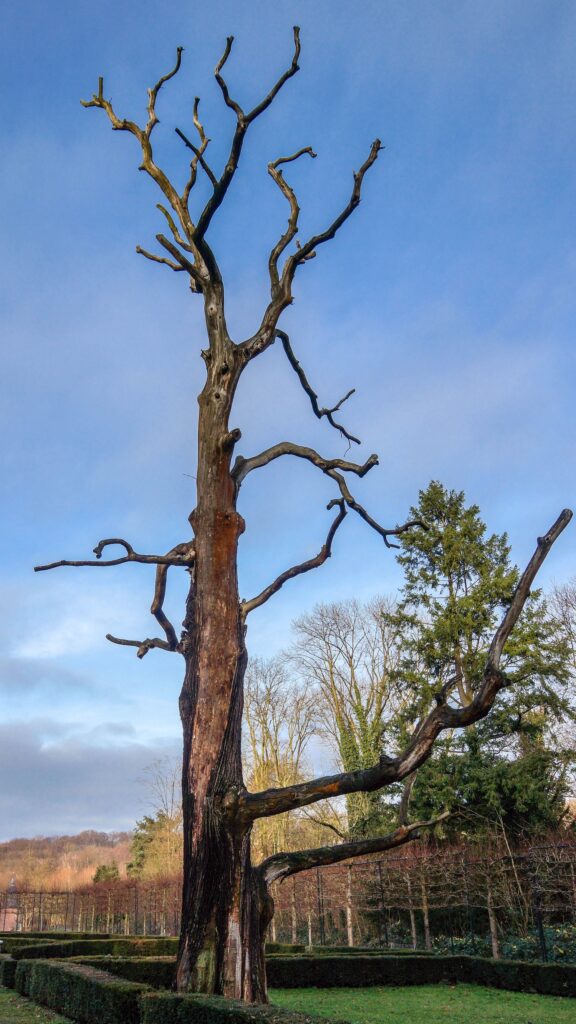
The bodies in the trees.
According to a report by the civil rights organization JULIAN, more than 70 modern-day lynchings have occurred between 2000 and 2025 within seven Southern states, with Mississippi reporting the highest number.
In 2025 and 2026 alone: Demartravion “Trey” Reed, 21, found hanging from a tree on the campus of Delta State University in Mississippi. Kyle Bassinga, 21, found hanging from a tree in Cobb County, Georgia in February 2026. Earl Smith in Albany, New York. Tory Medley in Wisconsin. Case after case. Tree after tree.
Trey Reed had broken legs and other injuries that would have made it physically impossible for him to hang himself. Officials ruled it a suicide before completing their investigation.
Local authorities in the Bassinga case acknowledged the historical sensitivity of the scene: a young Black man, hanging from a tree, in a region defined by the legacy of racial violence. They ruled it a suicide anyway.
The families are not conspiracy theorists. They are mothers and fathers and siblings asking for investigations that are being denied before they are even requested. The rush to close these cases – the speed with which suicide is declared before evidence is gathered – is not investigative incompetence. It is institutional practice.
Call it what it is. Strange fruit is still being harvested in America. The only thing that has changed is the paperwork.
And consider this. Black Americans are 37% less likely to die by suicide than the U.S. population overall. The CDC puts the rate of suicide by hanging specifically at less than 2 per 100,000 for Black people – less than half the rate for white Americans. The idea that young Black men are independently choosing, in significant numbers, to end their lives by hanging from trees in public spaces – the most historically charged image of racial terror in American history – defies both the data and basic common sense. These cases deserve investigation. They are not getting it.
The Buffalo Soldier’s bargain, revisited.
Here is the uncomfortable truth that Buffalo Soldier Day forces us to sit with.
Those men knew what they were participating in. They were not naive. They understood that the government sending them west was the same government that had enslaved their families, that was writing laws to suppress their votes, that viewed their lives as expendable instruments of federal policy. They went anyway. Because the alternative – no wages, no literacy, no foothold inside the only country they had – was worse.
Black Americans in 2026 are making versions of that same bargain every single day.
We vote in elections whose maps have been drawn to dilute our votes. We pay taxes to a government that is actively eliminating the jobs and protections our communities depend on. We call police who have historically been weapons against us because the alternative – no recourse at all – is worse. We navigate institutions that were not built for us and have demonstrated repeatedly that they do not intend to protect us.
We participate because the alternative is to be outside the system entirely. And being outside the system in America has never been safe for Black people.
That is not weakness. That is the oldest and most exhausting form of strategic survival.
What the bargain costs.
The Buffalo Soldiers are celebrated today as heroes. And they were. But the full story – the racism they endured, the substandard conditions they operated under, the impossible position they occupied between a government that used them and communities that feared them – that story gets sanitized into a feel-good narrative about Black excellence and military service.
We cannot afford to sanitize what is happening right now.
The districts are being redrawn to erase us. The women are disappearing and the bodies are coming back incomplete and nobody in power is writing it down. The men are being found hanging from trees and the paperwork says suicide before the body is cold. The federal jobs that gave our communities middle-class stability are gone. The DEI programs that built the pipeline are gone. The legal infrastructure that protected our votes is being dismantled ruling by ruling.
This is not a collection of isolated incidents. This is a coordinated withdrawal of the protections that made participation in this country survivable for Black Americans.
The Buffalo Soldiers made their bargain with what they had and what they faced. We are making ours.
The question is whether we are making it consciously. Whether we see it clearly. Whether we are building something of our own – in parallel, underneath, outside the system’s reach – while we continue to navigate inside it.
Because the system has shown us, repeatedly and recently, that it does not intend to protect us.
We have to protect each other.
What does the Buffalo Soldier’s bargain look like in your life right now? What are you participating in that costs you, because the alternative costs more? Drop it in the comments.